Feeling Fine and Skipping Doses: The Hidden Trap That Keeps Gout Patients Stuck in a Cycle of Flares
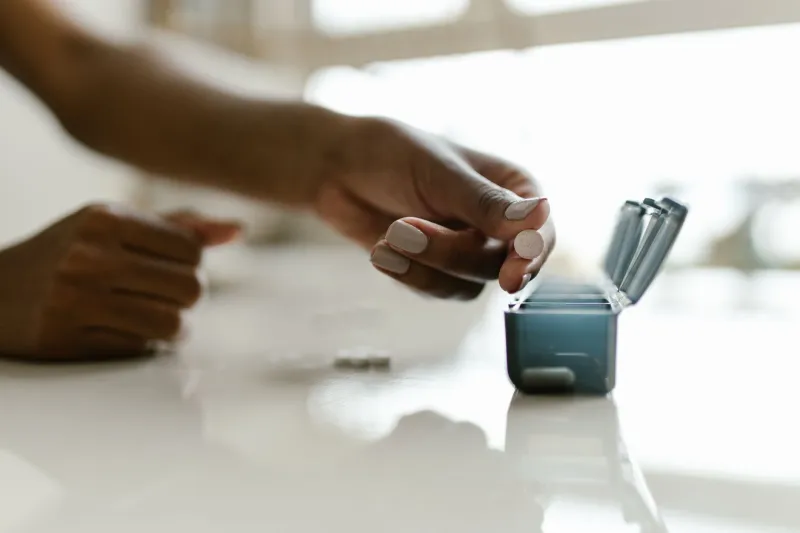
There is a peculiar challenge embedded in gout management that physicians rarely have enough appointment time to address fully: the difficulty of convincing a patient who feels completely well to take a daily medication for a condition they are not currently experiencing. It sounds straightforward on paper, but in practice, this dynamic quietly undermines treatment plans for a significant portion of the approximately 9 million Americans living with gout.
Colchicine, when used as a preventive agent, requires patients to maintain a consistent dosing schedule even during the weeks or months between flares — precisely when the urgency of the disease feels most distant. This is not a flaw in the medication. It is a flaw in how the human mind processes invisible risk. And understanding that flaw may be the key to finally breaking free from the cycle.
Why the Brain Resists Preventive Medication
Behavioral health researchers have long documented what is sometimes called "present bias" — the tendency for people to prioritize immediate comfort over future benefit. When a gout attack is raging, the calculus is simple: take the medication, reduce the pain. But when joints feel normal and daily life has resumed its ordinary rhythm, the cost of swallowing a pill (however small) suddenly seems to outweigh a risk that feels abstract.
This is compounded by a phenomenon clinicians sometimes call "illness identity discontinuity." Between flares, many gout patients genuinely do not feel like sick people. They are back at work, exercising, eating normally, and engaging with family. The idea that they carry a chronic metabolic condition requiring ongoing pharmaceutical management conflicts with their lived experience of feeling fine. The medication becomes a daily reminder of a disease they would rather not think about.
For some patients, stopping colchicine between flares also carries an element of optimism — a quiet hope that the last attack was, somehow, the final one. This is an understandable human response, but it is one that clinical evidence consistently contradicts.
What Actually Happens When Preventive Doses Are Skipped
Colchicine's preventive mechanism depends on sustained presence in the body. When used as prophylaxis — typically at lower doses than acute treatment — the medication works by dampening the inflammatory response that uric acid crystals trigger in joint tissue. This is not a dramatic, visible process. Patients do not feel colchicine working during symptom-free periods, which makes it easy to dismiss as unnecessary.
What patients often do not realize is that uric acid crystals do not disappear between flares. They accumulate in joint tissue, soft tissue, and sometimes organs over years, silently expanding their foothold. The absence of pain does not signal the absence of disease activity — it simply means the inflammatory threshold has not yet been crossed. When preventive colchicine is discontinued, that threshold becomes easier to breach.
The clinical consequence of inconsistent preventive dosing is well-recognized: patients who stop and restart prophylactic colchicine frequently experience what clinicians call "initiation flares" — attacks triggered by the changes in uric acid dynamics that occur when urate-lowering therapy is adjusted or when crystal deposits shift. Ironically, the very act of stopping preventive medication can accelerate the next attack.
The Conversation That Often Doesn't Happen
Many patients leave their prescribing physician's office with a clear understanding of how to use colchicine during an acute flare, but a much hazier sense of what preventive dosing means and why it matters. The distinction between "take this when it hurts" and "take this so it doesn't hurt" is not always communicated with the depth it deserves.
Healthcare providers working with gout patients may find it useful to reframe the preventive dosing conversation. Rather than describing colchicine as a medication for gout attacks, framing it as a tool for maintaining the joint environment that keeps attacks from occurring can shift a patient's mental model. The medication is not treating pain — it is guarding against the conditions that produce pain.
Analogies can help. A patient who takes a daily statin for cholesterol management rarely stops because their chest feels fine. A patient managing blood pressure with a daily antihypertensive does not abandon the regimen because they have no headache today. Gout prophylaxis deserves the same conceptual standing as these widely accepted chronic disease management strategies — and patients benefit from hearing that comparison made explicitly.
Strategies Patients Can Use to Stay on Track
For patients navigating this challenge independently, several practical approaches have proven useful in supporting consistent preventive dosing.
Anchoring the dose to an existing habit is among the most effective behavioral strategies. Pairing colchicine with a morning coffee, an evening toothbrushing routine, or a daily vitamin creates a behavioral cue that reduces reliance on conscious decision-making. When a medication becomes part of an automatic sequence rather than a deliberate choice, adherence improves substantially.
Keeping a flare journal — even a brief one — can counteract the memory distortion that symptom-free periods create. Patients who document the severity, duration, and functional impact of past attacks have a concrete record to consult when the temptation to stop medication feels reasonable. Reading a past entry about being unable to walk to the bathroom at 3 a.m. is a powerful motivator.
Setting a personal treatment milestone with a physician can also help. Rather than treating preventive colchicine as an open-ended commitment, patients may find it easier to commit to a defined period — six months, for example — after which they reassess with their doctor based on uric acid levels and flare frequency. This transforms an abstract ongoing obligation into a concrete, achievable goal.
Involving a household member in the routine, without making it burdensome, can add a layer of gentle accountability. A partner who knows the dosing schedule and can offer a quiet reminder is a resource many patients underutilize.
Redefining What Success Looks Like
Perhaps the most important mindset shift for gout patients on preventive colchicine is learning to interpret the absence of a flare as evidence that the medication is working — not evidence that it is no longer needed. In many chronic conditions, effective treatment produces a silence that patients mistake for recovery. Gout is particularly susceptible to this misreading.
A month without a flare is not a sign that the disease has resolved. It may well be a sign that the treatment plan is functioning exactly as intended. Patients who internalize this understanding are far better positioned to maintain the consistency that preventive colchicine requires.
For those who have struggled with this cycle — stopping medication during good periods, experiencing a return of attacks, restarting treatment, and repeating the pattern — recognizing the psychological mechanism at work is the first step toward interrupting it. The paradox of preventive gout care is real, but it is not insurmountable. With the right framing, the right habits, and an honest conversation with a healthcare provider, consistent adherence is an entirely achievable goal.