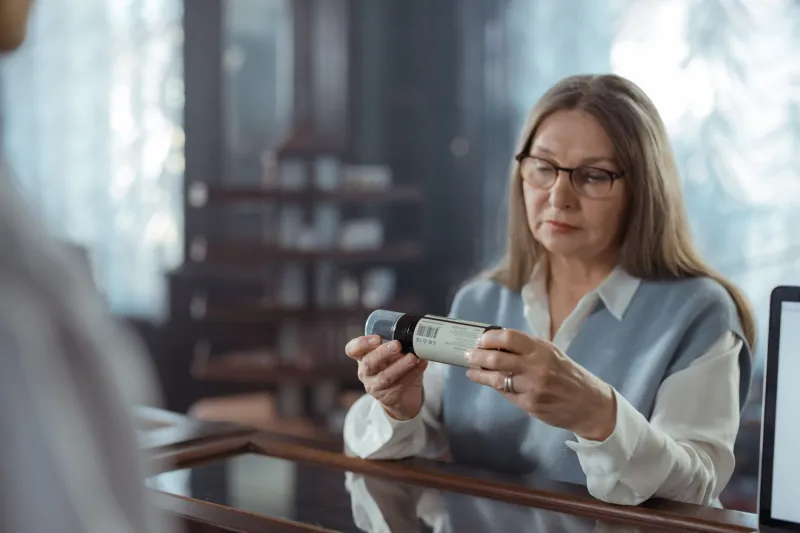
What Happens at the Pharmacy Counter Stays at the Pharmacy Counter—And That's a Problem for Colchicine Patients

There is a brief, underused moment that occurs every time a gout patient picks up a colchicine prescription. The pharmacist is standing on the other side of the counter, trained specifically in drug interactions and medication safety, and the patient is holding a bottle of medication that can interact dangerously with dozens of other substances. Yet in most American pharmacies—busy, understaffed, and driven by throughput—that moment passes in under sixty seconds. A signature is collected. A bag is handed over. The next customer steps forward.
This is not a criticism of pharmacists. It is a structural reality. But for colchicine patients, the gap between what pharmacy counseling could provide and what it typically does provide is wide enough to cause genuine harm.
Why Colchicine Demands a Different Level of Attention
Colchicine occupies an unusual position in the pharmacological landscape. It is an ancient compound—derived from the autumn crocus plant—that remains one of the most effective tools available for managing acute gout flares and preventing recurrence. However, its therapeutic window is narrow. The difference between a dose that works and a dose that causes toxicity can be surprisingly small, and that margin shrinks considerably when other medications are involved.
Unlike many drugs that interact with one or two common medications, colchicine is metabolized primarily through the CYP3A4 enzyme pathway and is also a substrate of P-glycoprotein (P-gp). These two biological systems are involved in processing dozens of commonly prescribed medications. When another drug inhibits either pathway, colchicine concentrations in the blood can rise well above intended levels—even when the patient is taking what appears to be a standard, appropriate dose.
In plain terms: a dose that was perfectly safe last month may not be safe this month if your medication regimen has changed.
The Prescription Drugs Most Likely to Create Problems
Several classes of prescription medications warrant serious attention when combined with colchicine. Pharmacists are trained to flag these, but patients who do not proactively disclose their full medication list may never trigger that review.
Statins are among the most significant. Medications such as atorvastatin, simvastatin, and lovastatin—widely prescribed for cholesterol management—can interact with colchicine to increase the risk of myopathy and, in severe cases, rhabdomyolysis, a dangerous breakdown of muscle tissue. Patients who are started on a statin while already taking colchicine, or vice versa, should specifically ask their pharmacist to review this combination.
Macrolide antibiotics, including clarithromycin and azithromycin, are potent CYP3A4 inhibitors. A short course of antibiotics prescribed by an urgent care provider who may not have reviewed your full medication history could significantly elevate colchicine blood levels during that treatment window.
Antifungal medications such as fluconazole and ketoconazole carry similar interaction risks. So do certain HIV protease inhibitors and calcium channel blockers like verapamil and diltiazem, the latter of which is frequently prescribed for heart rhythm conditions.
The critical word in all of these cases is disclosure. A pharmacist cannot protect a patient from an interaction they do not know about.
Over-the-Counter Products and Supplements: The Hidden Risk
Prescription drugs are only part of the picture. Many gout patients—particularly those managing multiple health conditions—also take over-the-counter medications and dietary supplements that never appear in a pharmacy's medication record because they were not purchased there.
Grapefruit and grapefruit juice are among the most well-documented colchicine concerns. Compounds in grapefruit inhibit CYP3A4 and P-gp, meaning that regular consumption can meaningfully increase colchicine exposure. Patients who enjoy grapefruit as part of a heart-healthy diet may be unknowingly altering their medication's behavior.
St. John's Wort, a widely used herbal supplement for mood support, works in the opposite direction—it induces CYP3A4, potentially reducing colchicine's effectiveness. Patients self-treating mild depression or anxiety with this supplement may find their gout medication performing below expectations without understanding why.
High-dose vitamin C and certain fish oil supplements are frequently taken by gout patients based on popular health advice. While evidence on their direct interactions with colchicine is more limited, they can influence uric acid metabolism in ways that complicate the overall treatment picture.
NSAIDs, including ibuprofen (Advil, Motrin) and naproxen (Aleve), are often reached for by gout patients during a flare as an adjunct to colchicine. While this combination is sometimes used clinically, it carries increased risk of gastrointestinal bleeding and kidney stress—risks that escalate in older adults and those with pre-existing kidney conditions.
Filling the Communication Gap: What to Bring to the Pharmacy
The most effective way to receive meaningful pharmacist counseling is to actively request it and arrive prepared. The following checklist is designed to help colchicine patients make that conversation as productive as possible.
Before you arrive:
- Write down every medication you take, including prescriptions from all providers, not just your primary care physician or rheumatologist.
- List all supplements, vitamins, herbal products, and over-the-counter medications, regardless of how routine or harmless they seem.
- Note any recent dietary changes, particularly increased consumption of grapefruit, tart cherry products, or other foods frequently marketed to gout patients.
- Record any new prescriptions you have received from urgent care, a specialist, or a telehealth provider in the past three to six months.
Questions to ask your pharmacist directly:
- Are there any medications on this list that interact with colchicine in ways that could require a dose adjustment?
- Has my colchicine dosage been verified against my current kidney function levels on file?
- Are there any supplements on this list that could affect how colchicine works?
- Is there anything I should avoid eating or drinking while taking this medication?
- Should I be concerned about combining colchicine with any over-the-counter pain relievers?
Asking these questions explicitly shifts the conversation from transactional to clinical. Pharmacists are qualified to answer all of them—they simply need the invitation and the information.
A Note on Kidney Function and Dose Verification
One additional area where pharmacy counseling can prove invaluable is renal function. Colchicine is renally cleared, meaning that patients with reduced kidney function are at higher risk for accumulation and toxicity. Dose adjustments are frequently warranted in this population, yet patients whose kidney function has declined since their original prescription was written may be taking a dose that is no longer appropriate.
If you have not had a recent kidney function test—or if your results have never been discussed in the context of your colchicine dose—raising this with your pharmacist is a reasonable starting point. They may not have access to your most recent lab values, but they can prompt you to follow up with your prescribing physician.
The Pharmacist as a Clinical Partner
American pharmacists are among the most accessible healthcare professionals in the country. Unlike physician appointments, which require scheduling and waiting, a pharmacist is available during every prescription pickup, often without an appointment. For gout patients managing a complex medication regimen, that accessibility represents a significant and frequently underused resource.
The conversation that does not happen at the pharmacy counter does not simply disappear—it reappears later as an avoidable adverse event, an unexplained flare, or a toxicity episode that lands a patient in the emergency room. Closing that gap requires effort from both sides of the counter, but it begins with patients who know what to ask and arrive prepared to ask it.