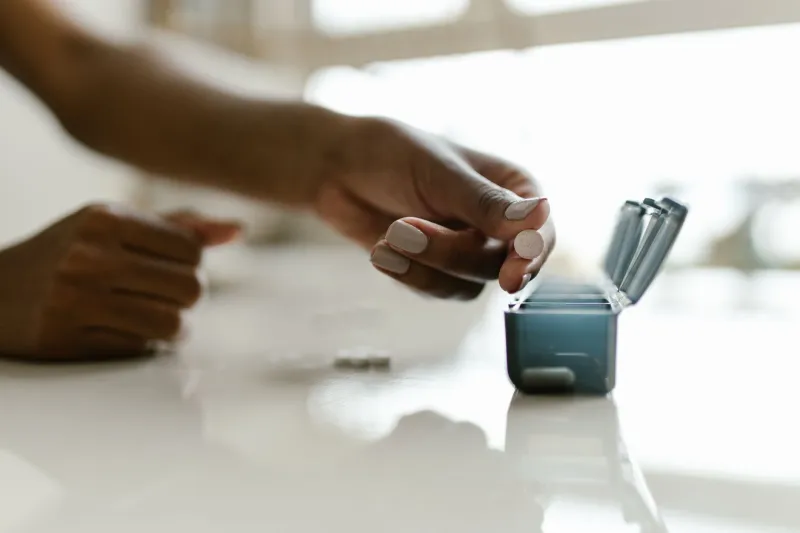
Daily Shield or Emergency Rescue: Why 'As Needed' Colchicine Is a Strategy That Backfires
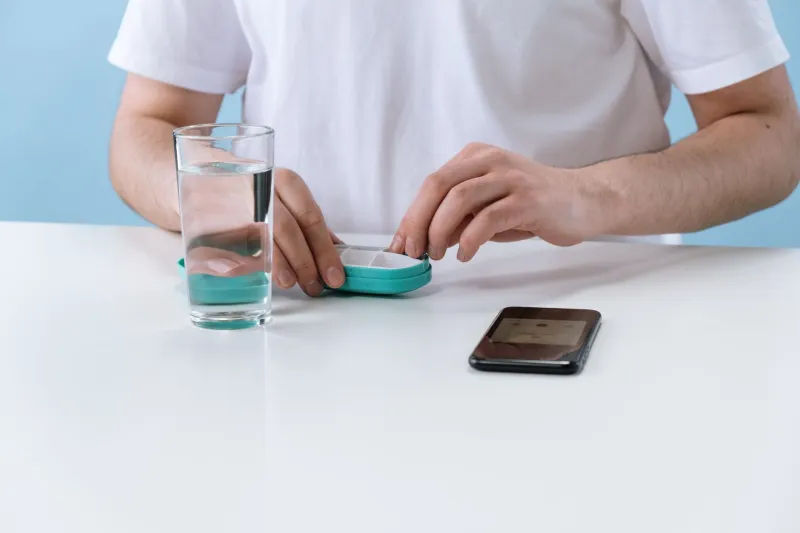
There is a particular kind of medical logic that feels sensible on the surface but quietly undermines the patient who follows it. For millions of Americans living with gout, that logic sounds something like this: "I feel fine right now, so I don't need to take my medication today."
It is a reasonable instinct. Medications carry side effects. Pills cost money. And when a joint that was swollen and burning last month now feels perfectly normal, the urgency to intervene dissolves. Why introduce a drug into a body that appears to be managing well on its own?
The answer, according to rheumatologists and a growing body of clinical literature, is that gout is almost never as quiet as it appears during symptom-free intervals. Beneath the surface calm, uric acid crystals continue to accumulate in joints and surrounding tissue — and the inflammatory machinery that triggers flares remains primed and ready. Choosing to use colchicine only when a flare erupts is not a neutral, conservative approach. For many patients, it is the very behavior that guarantees the next attack.
The Biology Behind the Backfire
Gout flares do not arise spontaneously. They represent the culmination of a slow, largely invisible process in which monosodium urate crystals deposit in synovial tissue over weeks or months. When the immune system finally detects those crystals as foreign invaders, it launches an inflammatory response — and that response is what patients experience as the agonizing swelling, heat, and immobility of an acute attack.
Colchicine works by disrupting the inflammatory cascade at a cellular level, specifically by interfering with the migration of neutrophils toward crystal deposits. When taken consistently at low prophylactic doses, it keeps that inflammatory machinery suppressed, reducing the likelihood that crystal accumulation will trigger a full-scale immune response. When taken only after a flare has already begun, it is essentially trying to put out a fire that has already spread through the building.
This distinction matters enormously. Research published in rheumatology literature has consistently demonstrated that patients on daily low-dose colchicine experience significantly fewer flares per year compared with those who rely on episodic, symptom-driven dosing. The protective effect is not incidental — it is the mechanism the drug was designed to provide.
Why Patients Resist the Daily Regimen
Despite this evidence, a substantial portion of gout patients in the United States never fully commit to maintenance therapy. Rheumatologists report a recognizable pattern in their practices: a patient arrives in acute distress, receives colchicine, experiences relief, and then quietly discontinues the medication once the pain subsides — only to return months later with another flare, often more severe than the last.
Several psychological and behavioral factors drive this cycle.
The absence of symptoms feels like the absence of disease. Gout's intermittent nature creates a false sense of resolution. Unlike conditions such as hypertension or diabetes, where the underlying problem is measurable even without symptoms, gout's silent phases are genuinely silent — at least from the patient's perspective. There is no pain to remind someone to take a pill, and that absence of pain is easily misread as recovery rather than remission.
Medication fatigue is real. Many gout patients are managing multiple chronic conditions simultaneously, which means their daily pill burden is already significant. Adding another daily medication — particularly one they associate with a problem they cannot currently feel — can seem unnecessary and burdensome.
Side effect concerns loom large. Gastrointestinal discomfort, which is the most commonly reported side effect of colchicine, leads some patients to discontinue the drug at the first sign of stomach upset. What they may not realize is that the lower doses used in prophylactic regimens are substantially better tolerated than the higher doses once prescribed for acute flares. The side effect profile of maintenance colchicine is considerably milder than many patients expect.
Cost and access create real barriers. For patients without adequate prescription drug coverage, the ongoing expense of a daily medication can feel difficult to justify when symptoms are absent. This is a legitimate concern, and one that warrants an honest conversation with both a physician and a pharmacist about generic availability and assistance programs.
What the Data Actually Shows
Clinical trials examining colchicine prophylaxis have produced consistent findings. Patients initiating urate-lowering therapy — such as allopurinol or febuxostat — who also take low-dose colchicine prophylactically experience dramatically fewer flares during the treatment initiation period compared with those who do not. This matters because starting urate-lowering therapy itself can paradoxically trigger flares in the short term as uric acid levels shift, and colchicine provides a critical buffer during that vulnerable window.
Beyond the initiation period, long-term prophylactic use has been associated with reduced rates of tophi formation and less cumulative joint damage in patients with recurrent gout. The protection is not merely symptomatic — it appears to interrupt the structural progression of the disease.
Conversely, patients who rely exclusively on acute dosing tend to present with more frequent hospitalizations, higher rates of chronic tophaceous gout, and greater functional impairment over time. The emergency-only approach does not spare the body from colchicine's effects — it simply ensures the drug arrives too late to prevent the damage.
Reframing the Conversation With Your Doctor
For patients who have been managing gout reactively, the shift toward prophylactic therapy can feel counterintuitive — and that is precisely why the conversation with a healthcare provider is so important. A rheumatologist or primary care physician familiar with current gout guidelines can help a patient understand where they fall on the disease severity spectrum and whether daily colchicine is appropriate for their specific situation.
The American College of Rheumatology's guidelines on gout management explicitly recommend prophylactic colchicine for patients initiating urate-lowering therapy, and many specialists extend that recommendation to patients with frequent recurrent flares regardless of their urate-lowering status. The evidence base is not ambiguous.
Patients who have concerns about long-term colchicine use — whether related to side effects, cost, or drug interactions — should raise those concerns directly rather than quietly discontinuing the medication. There are often solutions: dose adjustments, generic substitutions, patient assistance programs, or alternative prophylactic strategies for those with contraindications.
The Quiet Cost of Waiting
Every flare that colchicine prophylaxis prevents is not merely a day of pain avoided. It is a day of joint stress, inflammatory damage, and disease progression that does not occur. Over months and years, that difference accumulates in ways that affect mobility, quality of life, and long-term joint integrity.
The patients who fare best with gout are rarely the ones who respond most aggressively to flares. They are the ones who take seriously the periods between flares — who understand that the medication they are taking on a quiet Tuesday morning, when their joints feel perfectly fine, is doing exactly what it is supposed to do.
The colchicine paradox is this: the patients who need the medication least in the moment are often the ones who benefit most from taking it. Recognizing that counterintuitive truth may be the most consequential step a gout patient can take toward lasting relief.