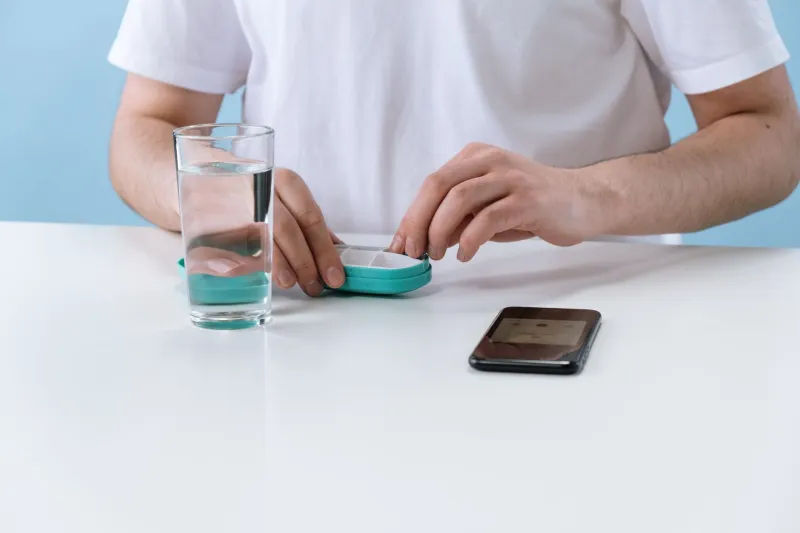
When Doing Everything Right Still Goes Wrong: Unpacking the Hidden Gaps in Colchicine Treatment

For many gout patients in the United States, the experience follows a familiar and frustrating arc: a rheumatologist or primary care physician prescribes colchicine, the patient fills the prescription, takes every dose on schedule, avoids the foods on the list, and still wakes up at 3 a.m. with a joint so inflamed it feels like broken glass. The clinical data says the medication works. The patient's lived experience says something different.
This is not a fringe phenomenon. It is, in fact, one of the most underexamined tensions in modern gout care—a gap between what controlled studies demonstrate and what happens when real people with complicated lives and complicated biology take a medication that was tested under carefully controlled conditions.
What Clinical Trials Actually Measure—and What They Don't
Clinical trials are the gold standard of medical evidence, and for good reason. They eliminate confounding variables, standardize dosing protocols, and track outcomes with a rigor that everyday clinical practice cannot match. The landmark studies that established colchicine's efficacy in gout management did exactly that: they enrolled patients, monitored adherence closely, and documented flare frequency and severity.
But here is the problem. The patients enrolled in those trials are, almost by definition, not typical patients. Trial participants are often younger, healthier in other respects, taking fewer concurrent medications, and subject to levels of monitoring and follow-up that simply do not exist in routine care. When a trial reports that 85 percent of adherent patients experienced meaningful flare reduction, it is reporting an outcome for a population that may bear little resemblance to a 58-year-old man in Ohio managing gout alongside hypertension, type 2 diabetes, and a demanding work schedule.
Adherence in clinical trials is also measured differently than in real life. A trial may define adherence as taking 80 percent or more of prescribed doses. A patient who considers themselves fully compliant may, in practice, fall into that same category—yet still be missing doses at precisely the moments when the medication's protective effect matters most.
The Genetic Factor That No One Warned You About
One of the most significant—and least discussed—reasons for variable colchicine outcomes is pharmacogenomics: the study of how an individual's genetic makeup affects their response to a drug. Colchicine is metabolized primarily through a liver enzyme called CYP3A4 and is transported out of cells by a protein called P-glycoprotein, encoded by the ABCB1 gene. Both of these pathways are subject to meaningful genetic variation across the human population.
Some patients are rapid metabolizers of colchicine. In practical terms, this means the drug is processed and cleared from their system faster than average, potentially shortening the window during which it exerts its anti-inflammatory effects. Others are slow metabolizers, which can increase the risk of side effects even at standard doses. Neither group is inherently doing anything wrong. Their biology simply responds to the medication differently than the average trial participant.
Genetic testing for drug metabolism is not yet standard practice in gout management, and most patients are never informed that their DNA could be influencing their treatment outcomes. This is a significant gap—one that patients can begin to address by asking their physician or pharmacist whether pharmacogenomic factors might be relevant to their specific case.
Food-Drug Interactions That Fly Under the Radar
Most gout patients know to avoid purine-rich foods like organ meats and shellfish. Fewer are aware that certain foods can directly interfere with how colchicine is absorbed and metabolized in the body.
Grapefruit and grapefruit juice are the most well-documented offenders. Compounds in grapefruit inhibit CYP3A4, the same enzyme responsible for metabolizing colchicine. When that enzyme is partially blocked, colchicine levels in the blood can rise unpredictably, increasing both the risk of toxicity and the likelihood that the dosing schedule a physician calibrated becomes, in effect, a different dosing schedule altogether. A patient who drinks a glass of grapefruit juice with breakfast every morning and takes their colchicine dose shortly afterward may be unknowingly altering the pharmacokinetics of their treatment on a daily basis.
Seville oranges, tangelos, and certain herbal supplements—including St. John's Wort—can produce similar interactions through related enzymatic pathways. These are not rare, exotic foods. They appear on American breakfast tables and in supplement aisles across the country, and they are rarely discussed during a routine prescription handoff.
The Undisclosed Medication Problem
Patients often take medications they do not think to mention to their prescribing physician. Over-the-counter pain relievers, antihistamines, antacids, and supplements may seem inconsequential, but several have documented interactions with colchicine. Statins, commonly prescribed alongside colchicine given the cardiovascular comorbidities that frequently accompany gout, are among the more significant interaction partners. Certain statins share metabolic pathways with colchicine, and their concurrent use can elevate colchicine plasma concentrations in ways that may subtly shift how the medication performs.
Cyclosporine, clarithromycin, and several antifungal medications are among the drugs with the most clinically significant interactions, but even medications considered relatively benign can alter colchicine's behavior in the body. The challenge is that patients often compartmentalize their medical care—discussing heart medications with a cardiologist, gout treatment with a rheumatologist, and never providing either physician with a complete picture of everything being taken simultaneously.
A simple but underutilized strategy: bring every bottle—prescription, over-the-counter, and supplement—to your next appointment and ask specifically whether any of them could be affecting how your colchicine works.
Building a Framework for Self-Advocacy
Understanding that your treatment plan may underperform for reasons unrelated to your adherence is the first step toward a more productive conversation with your healthcare provider. The second step is documentation.
Patients who track their flares with specificity—noting the date, time, joint affected, severity, what they ate in the preceding 24 hours, and any deviations from routine—give their physicians actionable data rather than subjective impressions. A patient who says "I keep getting flares" is less equipped to drive a treatment adjustment than one who says "I have had four flares in the past three months, all occurring within 48 hours of weekend travel when my sleep and eating patterns change."
The third step is asking targeted questions. Inquire whether genetic metabolism testing might be appropriate. Ask your pharmacist to conduct a formal drug interaction review using your complete medication list. Request a uric acid level measurement to confirm whether your serum urate is consistently below the 6 mg/dL threshold that is generally considered necessary for meaningful flare prevention—because colchicine manages inflammation but does not lower uric acid, and the two treatment goals must work in tandem.
The Honest Conversation Gout Care Needs
Colchicine is a genuinely effective medication with a long and well-documented track record. The issue is not the drug. The issue is the assumption—embedded in both clinical practice and patient expectation—that compliance alone is sufficient to guarantee outcomes. It is not, and the evidence increasingly suggests it never was.
Real-world gout management requires a more individualized lens: one that accounts for genetic variability, dietary patterns specific to each patient, the full scope of concurrent medications, and the lifestyle disruptions that no clinical trial can fully simulate. Patients who continue to experience flares despite diligent adherence deserve more than reassurance. They deserve a systematic investigation of the hidden variables that may be working against them—and the clinical support to address those variables directly.